Showing posts with label Identity Protection. Show all posts

Friday, October 14, 2016

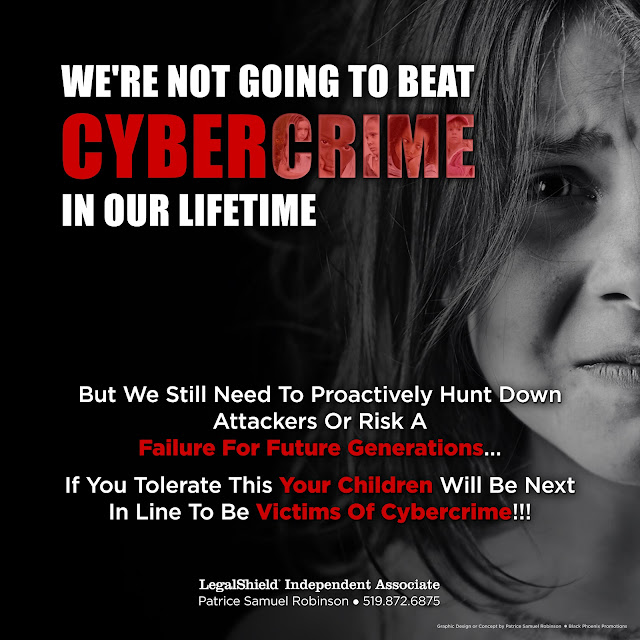
We're Not Going To Beat Cybercrime In Our Lifetime

We're Not Going To Beat Cybercrime In Our Lifetime 


We still need to proactively hunt down attackers or risk a "failure for future generations" - If you tolerate this your children will be next in line to be victims of cybercrime!!!

A former director of the FBI's crime and cybercrime response unit has warned that the problems of hacking and cybercrime will not be solved in our lifetimes, but we that we owe it to future generations to avoid completely mismanaging the issue to make it worse to deal with in years to come.

Shawn Henry spent 24 years at the FBI where he rose through the ranks to oversee all of the Bureau's criminal and cyber investigations across the globe before retiring from the organisation in 2012.

But despite boosting the FBI's computer crime investigative capabilities and taking part in numerous successful investigations into denial-of-service attacks, major banks, and corporate breaches, and nation-state sponsored intrusions, Henry believes that Cybercriminals aren't going to be disappearing anytime soon.

"We're not going to solve it, folks, not in our lifetime, but we have to constantly manage it," he said, speaking at IP EXPO 2016 in his post-FBI role as president of Cybersecurity firm Crowdstrike.

Indeed, cases such as the OPM Hack, which saw attackers steal personnel files of 4.2 million former and current government employees and security clearance background investigative information on 21.5 million people, or the recently disclosed Yahoo data breach appear to demonstrate that we have a long, long way to go before cybercrime is a thing of the past, especially as Cybercriminals gangs are becoming ever more professional.

That doesn't mean we should give up; for Henry, ignoring the issue is a disservice to those who'll need to fight it in future.

"Our inability to manage it is going to result in failure and it's not just failure for your company or for you, it's failure for future generations," he says, arguing the only way to fix it is "with the right people executing the right plans and demonstrating leadership" and to proactively hunt down any Cybercriminals that may in your network rather than waiting for them to give themselves away.

Rather than an organisation sitting back and waiting to see if it's attacked, Henry argues that cybersecurity professionals should be constantly examining their own network looking for indicators of attack because "If we're not out constantly hunting for the adversaries they're hunting us".

The FBI has also taken that approach to detecting cybercrime and Henry urged organisations to follow suit in order to have the best chance of identifying intruders on their network.

"By being proactive in the hunting and seeing the adversaries as they place their infrastructure and disrupting it. Not after we've been gigabytes of data being sent off the network, but identifying that before they can take action and impact negatively on the organisation," he says.

The FBI is very much practising what it preaches and Arlette Hart, Chief Information Security Officer at the FBI, recently outlined the agency's approach to insider security to ensure employees don't become malicious threats.

- By Danny Palmer - 10/07/2016
  
Find Out How To Protect Your Children's Identity Here 
https://www.idshield.com/?hub=patricesrobinson

The Dangers Of Posting Pictures Of Your Kids On Facebook

The Dangers Of Posting Pictures Of Your Kids On Facebook


In 2012, CNN reported that 66 percent of parents say they post pictures of their children on Facebook. In families spread across the world, it's an easy way for grandparents to feel more connected to grandchildren they don't see often. Parents can share the events of their lives and their children's with friends far and wide, and often do so without really considering potential consequences. As ubiquitous as parent-posted photos of children are on Facebook, it is important to realize the risks involved.

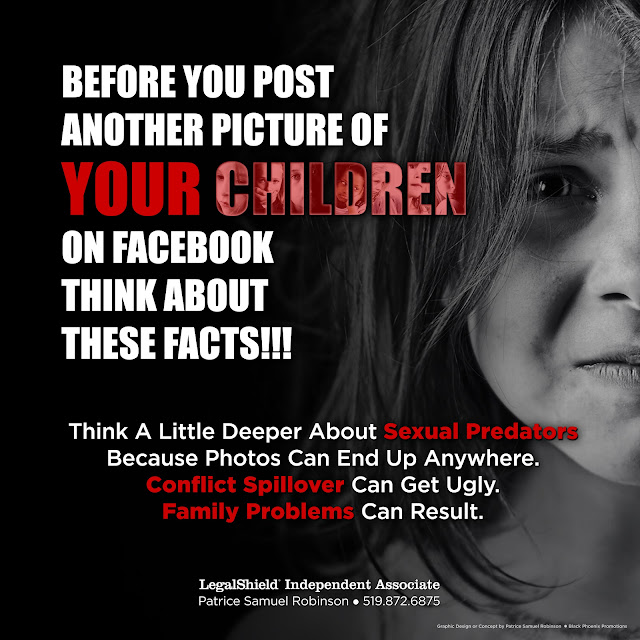
Think A Little Deeper About Sexual Predators:

Metadata automatically embedded in photos taken with Smartphones and some Digital Cameras can be accessed by site users when posted on sites such as Facebook. The Metadata records photo Time and Date, as well as Location, using Geographical Coordinates. In a 2011 FBI alert about disabling smartphone geotagging, an FBI Crimes Against Children Unit Intelligence Analyst explained that regularly posting daily routine details makes it easier to predict where you are and when children might be alone. Many scoff at the idea of a predator stumbling across a Facebook photo of their child and making an inordinate time investment in tracking him down when easier victims are available. They might be right. Stranger abductions are rare. More common are circumstances involving someone local, a casual acquaintance or someone who sees the child around the neighborhood, such as a landscaper or delivery person. Facebook photos of your children, posts, and status updates can give a nearby predator a dangerous amount of information.

Photos Can End Up Anywhere:

In 2012, a Boston CBS station reported that Facebook photos of local teenage girls were copied and posted on a pornography website. Forbes published the details of a late 2012 settlement Facebook made in a class action lawsuit involving Facebook users whose names and photos were used by Facebook in "Sponsored Story" advertisements without permission. In response to the lawsuit, Facebook has updated its terms of service, letting users know that, in accepting the terms of service during signup, they grant Facebook permission for this type of name and photo use. When parents post pictures of their kids on Facebook, they take a risk. They have no way of knowing where those photos could eventually end up or what they might be used for.

Conflict Spillover Can Get Ugly:

Parents posting pictures of their children on Facebook can leave them vulnerable to being targeted by people the parents have conflicts with. An unstable ex-boyfriend might not be able to get close enough to a woman to inflict harm but could figure out from a Facebook photo of her son in his basketball uniform what school her children go to, then target her children to hurt her. People have pasts and people in those pasts can be dangerous. Parents in the public eye also face this risk. In 2012, the "New York Daily News" reported that a Washington, D.C., reporter took a sabbatical after teens, angry about her stories on underage drinking, harassed and threatened her children via Facebook and at school.

Family Problems Can Result:

Children might come to resent those Facebook photos as an invasion of their privacy. Having their awkward years posted for all to see for years to come might embarrass them. They might prefer some moments to be kept private, away from the eyes of future employers and out of view of future romantic interests. People grow, change and mature on the path to adulthood. The idea of having past mistakes in associations, styles, and tastes recorded and displayed on the Internet for the foreseeable future and beyond is understandably unpleasant to some and serious family conflict can result. It is important to consider children's feelings regarding Facebook photos of them and to respect short- and long-term privacy concerns they might have.
 
- By Sharon Secor - 2016

Find Out How To Protect Your Children's Identity Here 

https://www.idshield.com/?hub=patricesrobinson


Friday, September 23, 2016

The Dangers Of Your Children's Pictures On Facebook

The Dangers Of Your Children's Pictures On Facebook


As many of you are well aware of, Facebook has various privacy settings that can be adjusted or tweaked, but there is absolutely no way to guarantee that your photos will not be seen by people who you could regret seeing them after you post. Although the risk of sexual predators stalking your children after seeing their Facebook photos is small, it can't be completely overlooked or discounted. Posting photos of your children can also set a bad example to them about privacy and opens them up to other dangers, such as Identity Theft on many levels.

Exposure To Sexual Predators & Pedophiles:

Posting photos of your children on Facebook could bring them to the attention of sexual predators and pedophiles, even if you set the privacy settings so that only friends and family are able to see the photos. Well-meaning relatives can republish the photos, with less stringent privacy settings. This practice can be dangerous if there are easily recognizable landmarks or information that can pinpoint the location of the child in the photo. Many Facebook games and apps encourage you to increase the size of your friend list, but doing so can expose your personal information to unwanted strangers. This information, in conjunction with status updates revealing your whereabouts and photos of your children, can make it all too easy for someone to stalk your family.

Setting Bad Examples:

Young children should be taught from an early age about the dangers of revealing too much information to strangers. With smartphones and other electronic devices making it easy to post photos online, it is important that children understand the dangers of uploading the wrong kind of pictures. If you upload lots of photos of your children to Facebook, they may draw the conclusion that there is nothing wrong with sharing images online. For example, many parents post photos of their children in the bath or in their swimwear. Unless children are taught boundaries about sharing personal photos such as these, it can have a negative effect on them later in life.

Identity Theft Issues:

After you post photos of your children online on sites such as Facebook, you no longer have any control over what the images are used for. Even with stringent privacy settings these photos can be viewed, downloaded, modified and uploaded elsewhere by other people if they are determined enough. Photos of your child could be used for advertising, as many unscrupulous website owners use photos they find on the Internet to promote their sites. Someone could even use photos of your child to create a fake profile on a teen site with the intention of getting close to other teens.

Opening Your Children To Bullying & Intimidation:

While posting embarrassing photos of your children on Facebook might seem like harmless fun, it can expose them to bullying and intimidation. If someone distributes these photos to online forums and websites as a joke it can cause a lot of emotional trauma for your child. In some severe cases, teens have committed suicide after threats and bullying online.


https://www.idshield.com/?hub=patricesrobinson

Wednesday, September 21, 2016

The Rise Of Medical Identity Theft

The Rise Of Medical Identity Theft

Consumer Reports - 08/25/2016 - by Michelle Andrews 

When thieves take your Personal Data to get Prescription Drugs, Doctor Care, or Surgery, it can endanger your Health and Finances. 


Read Full Article Here

Also find out how you can protect you and your family from Identity Theft Here

http://www.consumerreports.org/medical-identity-theft/medical-identity-theft/

Pros And Cons Of Electronic Health Records

Pros And Cons Of Electronic Health Records

Consumer Reports - 08/25/2016 - by Michelle Andrews 

Digital health histories offer the promise of better and more efficient healthcare but are still a work in progress.

Read Full Article Here

Also find out how you can protect you and your family from Identity Theft Here

http://www.consumerreports.org/medical-identity-theft/pros-and-cons-of-electronic-health-records/

Protect Yourself From Medical Identity Theft

Protect Yourself From Medical Identity Theft

Consumer Reports - 08/25/2016 - by Michelle Andrews 

Take steps to safeguard your personal health information, and know what to do if your data has been breached

Read Full Article Here

Also find out how you can protect you and your family from Identity Theft Here

http://www.consumerreports.org/medical-identity-theft/protect-yourself-from-medical-identity-theft/

Patrice Samuel Robinson

Medical Privacy Laws Explained

Medical Privacy Laws Explained

Consumer Reports - 08/25/2016 - by Michelle Andrews 

What you need to know about HIPAA and more.

Read Full Article Here

Also find out how you can protect you and your family from Identity Theft Here

http://www.consumerreports.org/medical-identity-theft/medical-privacy-laws-explained/

Patrice Samuel Robinson

What's Our Health Data Worth?

What's Our Health Data Worth?

Consumer Reports - 03/15/2016 - by Jerry Beilinson

At the SXSW Interactive festival, experts on a Consumer Reports panel weigh the pros and cons of sharing personal info.

Read Full Article Here

Also find out how you can protect you and your family from Identity Theft Here

http://www.consumerreports.org/wearable-tech/whats-health-data-worth/

Patrice Samuel Robinson